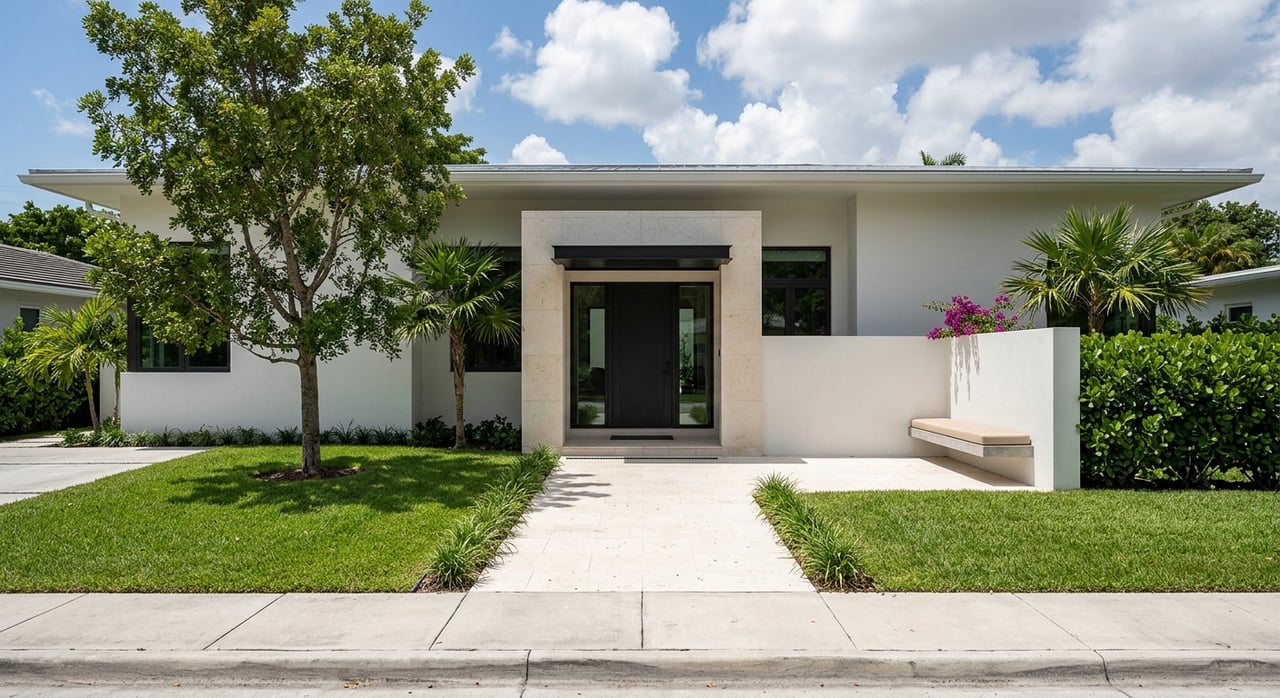
South Miami Luxury Homes And Walkable Village Living
South Miami Real Estate Four Corners Real Estate May 21, 2026
South Miami Real Estate Four Corners Real Estate May 21, 2026
If you want a Miami address that feels polished without feeling oversized, South Miami deserves a closer look. This is one of the rare places where you can find luxury homes, a defined village core, and practical transit access in the same compact setting. For buyers comparing lifestyle, architecture, and value across nearby luxury markets, South Miami offers a distinct mix worth understanding. Let’s take a closer look.
South Miami is small by design and feel. The city has 13,660 residents within just 2.27 square miles, and its official planning and history materials continue to emphasize a small-town atmosphere.
That village feel is most visible in the walkable core around Sunset Drive. The city describes its Hometown District as a charming, walkable environment with outdoor dining and annual community events, giving the area a genuine center rather than a scattered suburban pattern.
This character is also reinforced by city planning. South Miami created a Transit-Oriented Development District near the South Miami Metrorail station to support mixed-use, multi-story development, while other nearby areas are intended as lower-density transitions next to single-family homes.
For many buyers, walkability means more than a pleasant streetscape. It means being able to enjoy dining, errands, and everyday destinations without relying on a long drive for each stop.
In South Miami, Sunset Drive serves as the Main Street and heart of the district. The city continues to study placemaking, branding, multimodal planning, and streetscape improvements there, which shows an ongoing commitment to the area’s pedestrian-friendly identity.
The South Miami Metrorail station adds another layer of convenience. Located at 5801 South Dixie Highway, the station sits near destinations that include Shops at Sunset Place, the South Miami Branch Library, City Hall, South Miami Hospital, and the police department.
Miami-Dade reports that Metrorail runs daily from 5 a.m. to midnight through South Miami, Coral Gables, and downtown Miami. The South Miami station also connects to Metrobus routes 37, 72, and 73, and offers 1,802 parking spaces, including overnight parking.
South Miami does not present a single, uniform luxury housing type. Instead, the city offers a layered housing stock shaped by different eras of development.
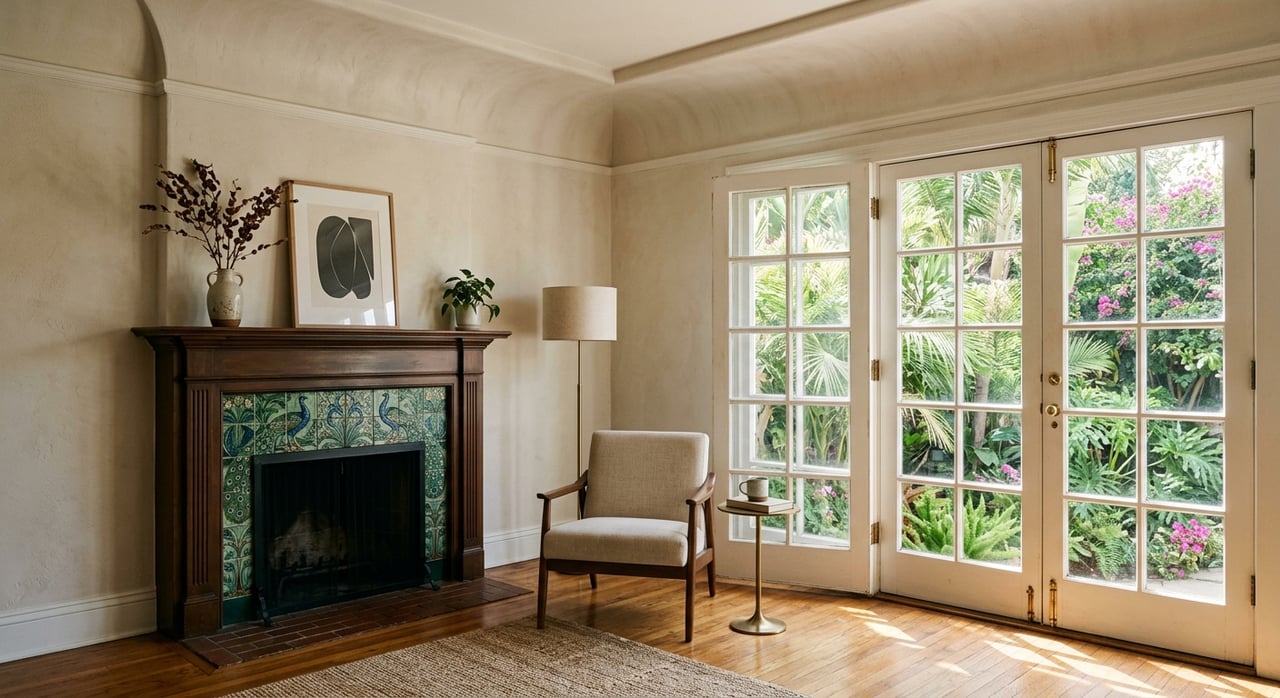
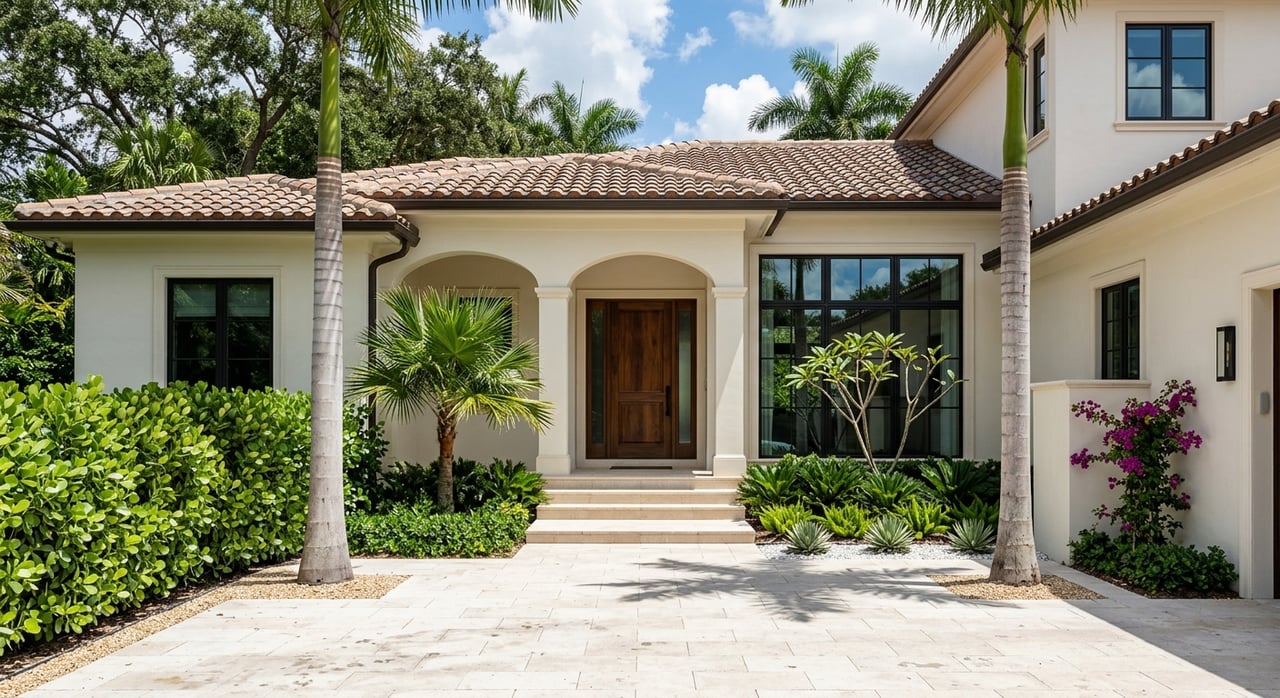
You will find older Florida homes, postwar ranch and minimal traditional houses, and newer contemporary infill. That architectural mix can appeal to buyers who want character, buyers who want renovation potential, and buyers who prefer more updated design language.
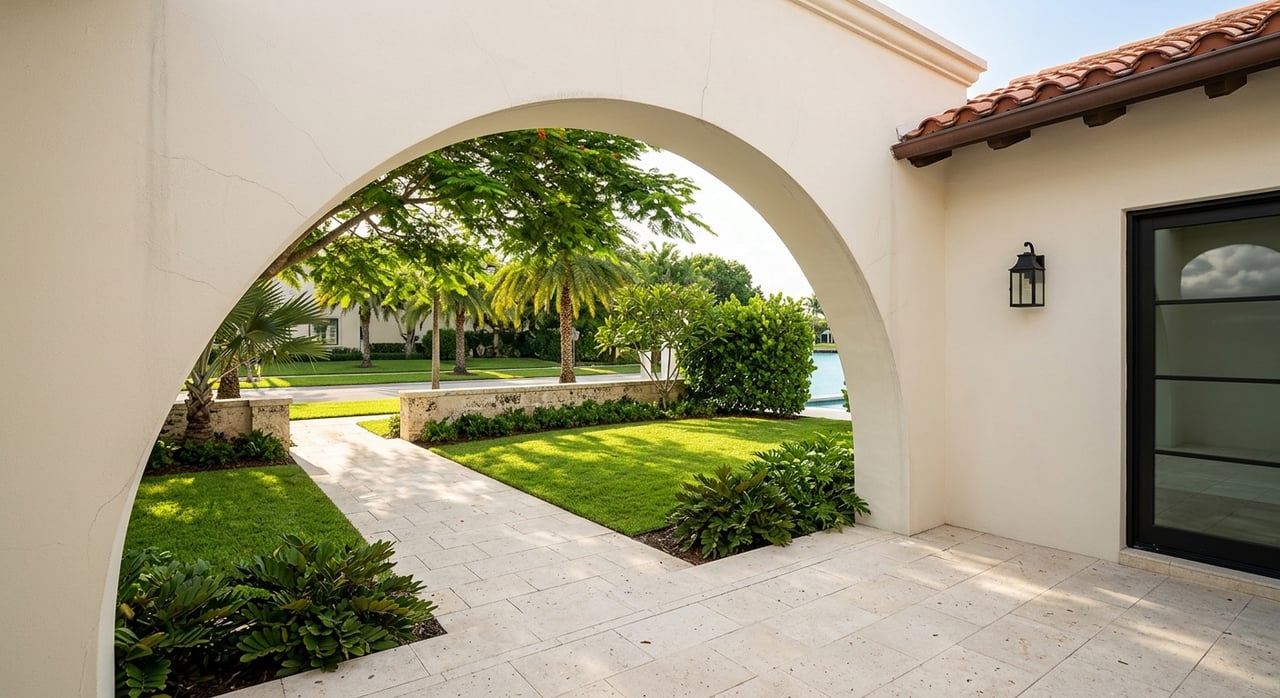
South Miami’s preservation materials also identify Cambridge Lawns as a 31-home historic district with small Tudor and Mediterranean-style family homes from the 1920s and 1930s. These details matter because they help explain why the city feels architecturally varied instead of master-planned or repetitive.
One of South Miami’s strengths is that its planning framework supports more than one residential experience. Some areas are clearly intended to feel more spacious, while others are shaped for denser, transit-adjacent living.
According to the city’s comprehensive plan, new single-family parcels are intended to be at least 10,000 square feet. Platted lots are expected to be at least 50 feet wide with 50 feet of frontage, and townhouse parcels are also tied to a 10,000-square-foot minimum.
The zoning map adds more context. South Miami includes an Estate Residential district along with its Transit Oriented Development District, helping explain why the city can offer both larger residential pockets and a more urbanized village center.
If you are drawn to older homes, South Miami offers real charm. It also calls for a more careful review process before you plan major changes.
The city maintains a Historic Preservation Overlay District and a Historic Preservation Board for designated resources. In practical terms, that means renovation, alteration, or teardown plans involving designated buildings or districts may involve preservation review.
For buyers considering Tudor, Mediterranean, or other older properties, this is not necessarily a drawback. It simply means due diligence matters, especially if your goal is to modernize, expand, or rebuild.
South Miami sits in the luxury conversation, but its pricing tells a more nuanced story than some neighboring markets. As of March 2026, Redfin reported a South Miami median sale price of $1,056,000 and a median sale price per square foot of $586.
That places South Miami below several nearby luxury benchmarks. Coral Gables posted a median sale price of $1,225,000 and $869 per square foot, Pinecrest reached $2,168,750 and $688 per square foot, and Coconut Grove stood at $2.6 million and $919 per square foot.
Based on those figures, South Miami was 13.8% below Coral Gables on median sale price, 51.3% below Pinecrest, and 59.4% below Coconut Grove. On median price per square foot, it was 32.6% below Coral Gables, 14.8% below Pinecrest, and 36.2% below Coconut Grove.
For buyers weighing address, lifestyle, and budget, those comparisons are useful. South Miami can be viewed as a premium market with a more moderate entry point than some of its best-known luxury neighbors.
Luxury buyers often assume that every desirable Miami-area neighborhood moves at a rapid pace. In reality, the timing here is more measured.
Redfin shows median days on market of 104 in South Miami. By comparison, Coral Gables was at 113, Pinecrest at 101, and Coconut Grove at 96.
That suggests buyers may have time to evaluate inventory carefully, compare property types, and think through trade-offs. It does not remove the need for preparation, but it does support a more disciplined search process.
South Miami can work especially well if you want proximity and polish without committing to the highest pricing seen in nearby luxury enclaves. The area may also appeal if you value a walkable district, transit access, and a housing mix that includes both character homes and newer construction.
For some buyers, the appeal is lifestyle-driven. You get a defined village center and everyday convenience.
For others, the appeal is strategic. You can compare South Miami against Coral Gables, Pinecrest, and Coconut Grove while considering how pricing, architecture, and lot patterns align with your goals.
The best South Miami purchase is usually not just about finding a beautiful home. It is about matching the right property type, location within the city, and long-term plan.
A buyer interested in a historic home should evaluate preservation implications early. A buyer focused on daily convenience may prioritize proximity to Sunset Drive or the Metrorail station. A buyer comparing value may want to study how South Miami’s pricing differs from nearby luxury markets on both total price and price per square foot.
That kind of analysis is where local guidance matters. In a market with multiple housing eras, distinct planning districts, and meaningful differences from one pocket to the next, careful positioning can make a measurable difference.
If you are considering South Miami as part of your Miami luxury search, the experienced Miami real estate agents at Four Corners Real Estate can help you evaluate the market with a clear, data-driven, and discreet approach.
Stay up to date on the latest real estate trends.
Miami Shores Real Estate
South Miami Real Estate
Fisher Island Real Estate
Coral Gables Real Estate
Ready to find your next investment or dream home? Whether you’re building a portfolio or looking for the perfect residence, we’re here to deliver clarity, strategy, and results.